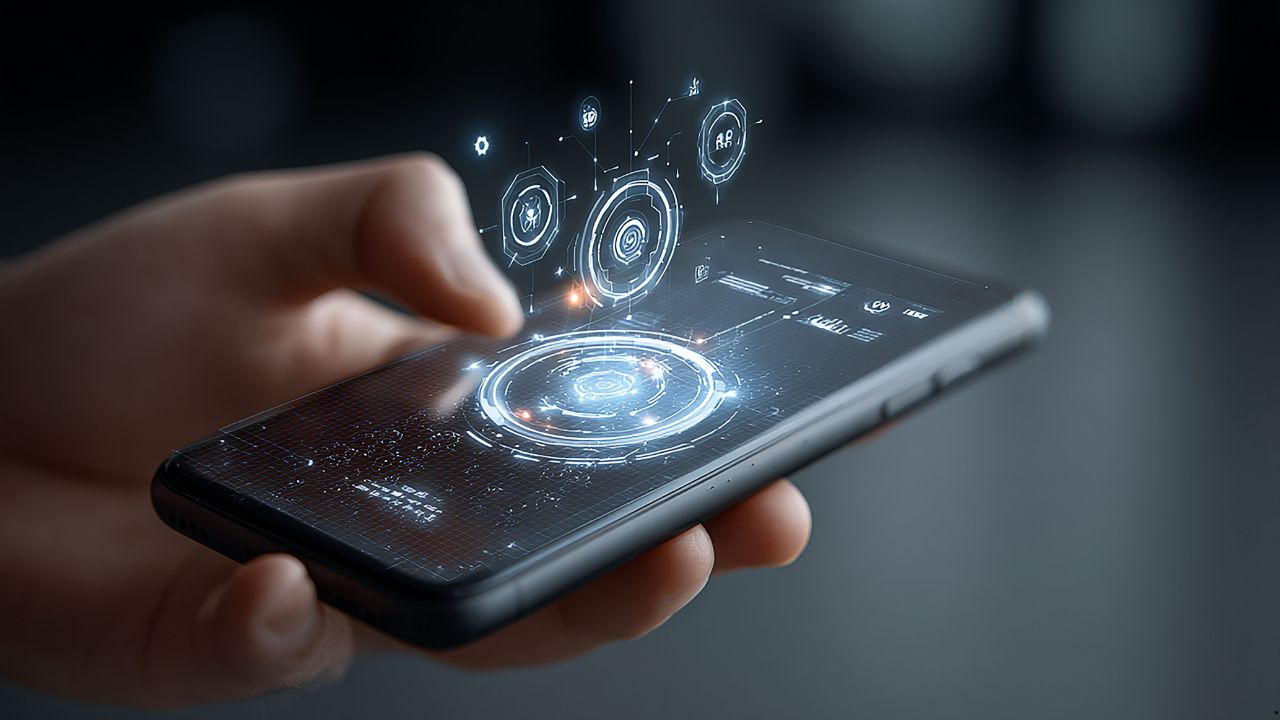
Technology is changing faster than ever before. Every year, new ideas move from research labs into real life. By 2026, many of these technologies will no longer feel “new.” They will be part of how we work, learn, and live every day.
Some of these changes happen quietly in the background. Others are more visible and exciting. But all of them are shaping the future in important ways.
To better understand where these innovations are heading, it helps to look at the future of technology and how modern trends, tools, and breakthroughs are already reshaping industries and daily life. This broader perspective makes it easier to see why the technologies discussed below will matter so much in 2026 and beyond. Each one is explained in simple language, with real-world meaning. You don’t need a technical background to understand what’s coming next.
Table of Contents
1. Generative AI and Intelligent Agents
Artificial intelligence has grown far beyond simple chat tools. By 2026, generative AI and intelligent agents are becoming active workers inside businesses.
These systems don’t just respond to commands. They can plan tasks, make decisions, and complete work on their own. Many companies now use AI agents for customer service, content creation, data analysis, and internal operations.
What makes this important is efficiency. AI helps people work faster and with fewer mistakes. It is especially helpful for beginners, giving them guidance and support in real time.
Instead of replacing humans, AI is becoming a smart partner that handles routine work and leaves humans free to focus on bigger ideas.
2. Advanced Computing Technologies
Traditional computers are powerful, but they cannot solve every problem efficiently. This is where advanced computing comes in.
Quantum computing is designed to handle extremely complex problems. These include drug discovery, climate modeling, and financial risk analysis. Neuromorphic computing, inspired by the human brain, focuses on faster processing with lower energy use.
By 2026, these systems will mostly be used by research centers and large organizations. Even so, their impact will reach everyday life through better medicines, smarter systems, and faster innovation.
Advanced computing helps solve problems that were once considered impossible.
3. Next-Generation Connectivity
Strong connectivity is the foundation of modern technology. By 2026, next-generation connectivity will go beyond today’s networks.
More people around the world are getting online. At the same time, billions of devices are being connected through the internet of things. This includes phones, vehicles, factories, and smart cities.
What’s new is that networks are becoming intelligent. They can manage traffic automatically, reduce delays, and adjust performance using AI.
This makes communication faster, smoother, and more reliable than ever before.
4. Robotics and Autonomous Systems
Robots are no longer limited to factories. In 2026, robotics and autonomous systems are used in many industries.
Warehouses use robots to move goods faster. Hospitals use them to support medical staff. Farms use them to monitor crops and improve harvests.
Modern robots can work safely alongside humans. They can move independently and learn from data over time.
These systems improve productivity while reducing physical strain on workers.
5. Extended Reality (XR) Technologies
Extended reality, including virtual reality and augmented reality, is becoming more useful beyond gaming.
By 2026, XR is widely used for training, education, healthcare, and remote work. People can practice skills in virtual environments without risk.
Doctors can train for procedures. Engineers can test designs. Employees can learn faster through immersive experiences.
As devices become lighter and easier to use, XR will feel like a natural part of digital life.
6. Brain-Computer Interfaces (BCIs)
Brain-computer interfaces allow direct communication between the brain and machines.
Today, these systems are mainly used in healthcare. They help people with paralysis, speech loss, or neurological conditions communicate and regain control.
By 2026, BCIs are still developing, but progress is steady. Non-invasive and minimally invasive options are becoming more accurate and reliable.
In the future, BCIs may allow hands-free interaction with devices and smarter assistive technologies.
7. Synthetic Biology and Bio-Engineering
Synthetic biology combines biology and engineering to solve real-world problems.
Scientists can now edit genes to treat genetic diseases. They can also design organisms to produce medicines, fuels, and sustainable materials.
The cost of DNA sequencing and synthesis continues to fall. This makes bio-engineering more accessible and scalable.
By 2026, bio-engineering plays a bigger role in healthcare, agriculture, and environmental protection.
8. Climate Technology and Clean Energy
Climate challenges are pushing innovation forward. Climate technology focuses on reducing emissions and building sustainable systems.
Renewable energy sources like solar and wind are expanding rapidly. Energy storage systems help balance power supply. Smart grids use AI to manage electricity more efficiently.
Clean transportation, including electric vehicles, continues to grow worldwide.
By 2026, climate tech is no longer optional. It is a key part of economic growth and global policy.
9. Nanotechnology Innovations
Nanotechnology works at an extremely small scale, but its impact is huge.
It is used in medicine to deliver drugs more precisely. It improves batteries, electronics, and water purification systems.
Nanomaterials can be stronger, lighter, and more efficient than traditional materials.
By 2026, nanotechnology is quietly improving many products people use every day.
10. Digital Trust and Cybersecurity
As technology grows, so do digital risks. Cybersecurity and digital trust are more important than ever.
Cyberattacks are becoming more automated and advanced. At the same time, many organizations are adopting AI faster than they can control it.
By 2026, trust becomes a major competitive advantage. Companies must protect data, manage AI responsibly, and stay transparent with users.
Security is no longer just about defense. It is about confidence and reliability.
Major Technology Trends Shaping the Future
These technologies do not exist in isolation. They are increasingly connected.
AI is becoming part of every system. Robotics, connectivity, and computing are merging into unified platforms. Humans and machines are working together more closely.
The energy transition is accelerating, supported by digital tools and smart infrastructure.
Together, these trends create intelligent systems that can adapt, learn, and improve over time.
Final Thoughts
The technologies shaping 2026 are already changing the world around us. Understanding them early helps individuals and businesses stay prepared.
You don’t need to master every technology. What matters is staying aware and open to change. The future belongs to those who learn, adapt, and move forward with confidence.
Technology is not just evolving. It is reshaping how we live—and the journey has already begun.