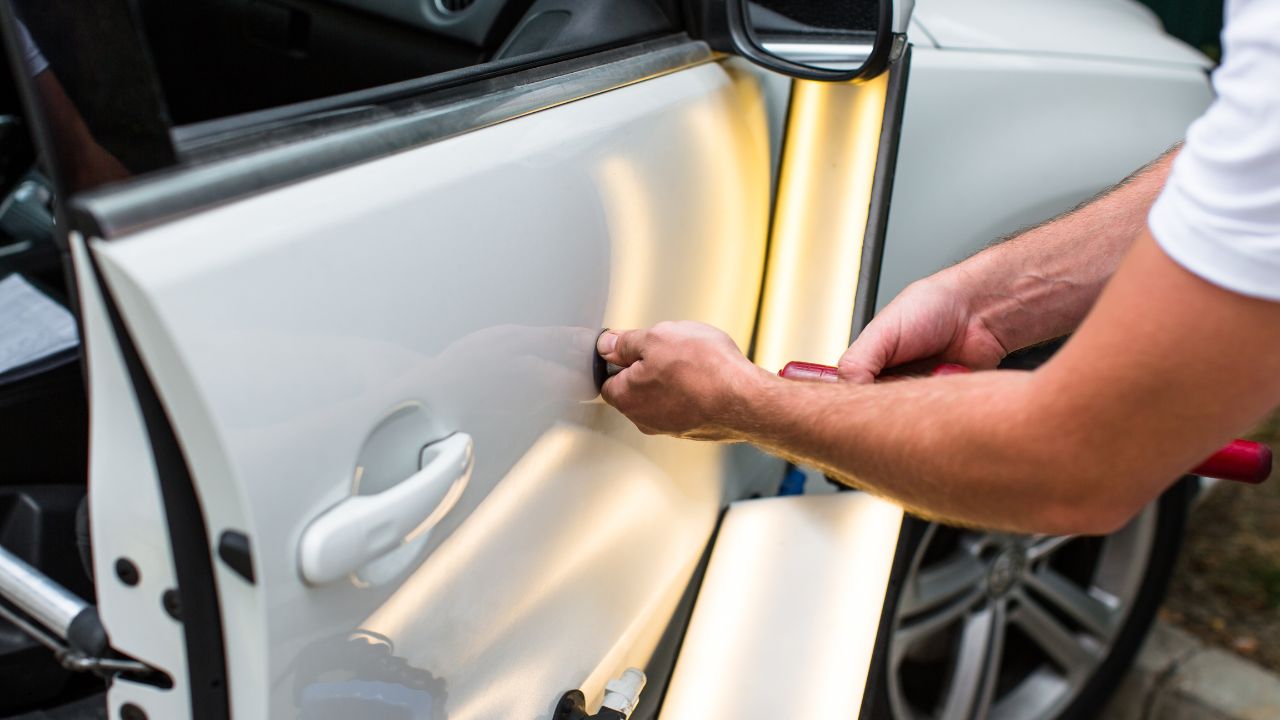
You walk out of the grocery store, load your bags, and notice it – a fresh dent right on the side panel of your car. Maybe it was a shopping cart, maybe a hailstorm, or maybe someone opened their door a little too hard. Whatever the cause, your stomach drops. Getting that dent fixed used to mean a week at the body shop, a hefty bill, and a lot of sanding, filling, and repainting.
Today, things are very different. Thanks to a specialized tool system called an ausbeulstation, professional technicians can restore your car’s body to its original shape quickly, cleanly, and often without touching the paint at all. This guide breaks down everything you need to know – whether you are a car owner trying to understand your options, or a workshop owner thinking about investing in the right equipment.
Table of Contents
What Exactly Is an Ausbeulstation?
The word ausbeulstation is German, and it roughly translates to “dent repair station.” It refers to a complete set of tools – typically mounted on a rolling cart – that a technician uses to push, pull, and massage dented metal back into shape without cutting, filling, or repainting.
Think of it as a very precise mechanical system. Instead of hammering a dent from the inside (the old-school approach), a karosserie ausbeulstation works from the outside, using a combination of pulling rods, slide hammers, induction heaters, and various attachments to gently coax the metal back to where it belongs.
The “station” part of the name is important. It is not a single tool – it is an entire organized workspace on wheels. Everything a technician needs is in one place, which makes the repair faster, cleaner, and more accurate.
How the Repair Process Actually Works
If you have never seen a karosserie ausbeulstation in action, the process might surprise you with how methodical it is. Here is a step-by-step look at what happens:
- The technician first cleans and inspects the dented area carefully, checking the depth of the damage and whether the paint is cracked or still intact.
- A small metal stud or washer is welded to the center of the dent using a low-heat welding tool. This is a very controlled and minor attachment – it does not damage the surrounding metal.
- The technician attaches a pulling lever from the ausbeulstation to the stud and very slowly applies outward pressure, drawing the metal back to its original position.
- Patience is critical here. Pulling too fast or too hard causes the metal to overcorrect – pop out too far – which then requires additional work to push back in.
- Once the panel is level again, the stud is removed and the surface is polished smooth. In many cases, especially with the paintless dent repair method, no repainting is needed at all.
The whole thing is equal parts science and craft. A good technician develops a feel for the metal over time, knowing exactly how much tension to apply and when to stop.
Steel vs. Aluminium: Why the Material Matters
Not all cars are made from the same stuff, and this matters a great deal when it comes to dent repair. Traditional vehicles use steel body panels, which are relatively forgiving. Steel stretches and moves more predictably, making it easier to pull back without cracking.
However, a growing number of modern cars – particularly electric vehicles and premium European models – use aluminium panels to reduce weight. Aluminium behaves very differently. It is lighter but also more rigid and more brittle than steel. If you apply the wrong amount of force, aluminium can crack rather than flex.
This is why a quality ausbeulstation karosserie system will have adjustable settings for both materials. The technician can dial in the right amount of power and heat for whichever type of metal they are working with. If you drive a BMW, a Tesla, or any other aluminium-heavy vehicle, make sure the workshop you choose has equipment that is actually rated for aluminium repair. Not all shops do.
The Key Components Inside a Professional Station
A complete ausbeulstation is made up of several distinct tools that work together. Here is what you will typically find in a professional-grade setup:
- Slide hammers and pulling bars – the main tools used to apply controlled outward force on a dent.
- Pulling bits and hooks – a variety of attachments (a good station should have at least ten) for different dent shapes, sizes, and locations on the vehicle.
- Induction heater – warms the metal to make it more pliable, especially useful for aluminium or for dents in cold climates.
- Soft-tip hammers – for finishing work; these gently tap high spots down without scratching or marring the surface.
- Rolling cart with storage – keeps all components organized and easy to move around the workshop floor.
The design of the cart matters more than people realize. A well-designed rolling station means the technician never has to leave the work area to find a tool, which keeps the repair process flowing smoothly and reduces the chance of errors.
Paintless Dent Repair: The Gold Standard
Within the broader world of auto dent repair, PDR – Paintless Dent Repair – has become the most sought-after method, and for good reason. When performed correctly using a professional karosserie ausbeulstation, PDR leaves the factory paint completely untouched.
Why does this matter? Because factory paint is almost always better than repainted panels. Body shops do excellent work, but repainting introduces the possibility of color mismatches, visible texture differences, and long-term issues with how new paint adheres and weathers. When you preserve the original paint, you also preserve more of the car’s resale value.
PDR is ideal for shallow dents caused by hail, parking lot bumps, or minor collisions where the paint has not cracked. It is not suitable for every situation – deep creases, rust spots, or damage with shattered paint will still require traditional bodywork – but for a huge percentage of everyday dents, PDR through a quality ausbeulstation is the smartest choice.
Why Car Owners Should Care About the Tools Their Shop Uses
Most people hand over their car keys, say “fix the dent,” and wait for a call saying it is done. But it is worth taking a few minutes to ask your repair shop what kind of equipment they use. Here is why it matters to you as a customer:
- Speed – A shop with a modern ausbeulstation can often turn around repairs that would take days using traditional methods in just a few hours.
- Cost – Because PDR uses less material (no filler, little or no paint), the repair typically costs significantly less.
- Quality – A precise karosserie ausbeulstation produces cleaner results with less risk of the wavy, uneven surfaces that can sometimes appear with lower-quality body filler work.
- Eco-friendliness – Using fewer chemicals, solvents, and paints is genuinely better for the environment.
Do not be shy about asking a workshop whether they use professional-grade ausbeulstation equipment and whether their technicians are trained in PDR techniques. A reputable shop will be glad to show you what they have and explain their process.
Safety Tips for Anyone Working With These Tools
For technicians or workshop owners using an ausbeulstation, safety is not optional. These are powerful electrical tools that generate heat, and they deserve respect. A few key practices to keep in mind:
- Always wear safety glasses – sparks from stud welding can travel unpredictably.
- Wear heat-resistant gloves – metal panels and tools can get extremely hot during the induction heating phase.
- Keep the workspace dry – water and electrical equipment are a dangerous combination.
- Inspect cables before every use – a frayed or cracked cable should be replaced immediately, no exceptions.
- Read the manual for your specific model – every karosserie ausbeulstation has its own specifications, power settings, and safety guidelines.
Taking the time to follow these steps protects both the technician and the quality of the repair. Rushing is the enemy of good dent work.
How to Choose the Right Ausbeulstation for Your Workshop
If you run a garage and you are considering buying one of these systems, here are the most important things to check before you spend your money:
- Warranty – Look for at least a one-year warranty. A manufacturer who stands behind their product is a good sign of build quality.
- Number of attachments – A well-equipped ausbeulstation karosserie should come with a minimum of ten different pulling bits to handle a wide range of dent types.
- Steel and aluminium compatibility – Make sure the unit has adjustable power settings for both materials.
- Cart quality – Check that the cart rolls smoothly and has enough organized storage for all components.
- Brand reputation and service support – Can you get replacement parts easily? Is there local or online technical support?
Resist the temptation to go with the cheapest option available. A low-cost machine that breaks after a few months ends up costing more than a quality one bought right the first time. A professional-grade ausbeulstation is an investment that pays for itself many times over in saved time and satisfied customers.
Keeping Your Station in Top Shape
Buying good equipment is only half the job – maintaining it is the other half. Here is a simple routine that keeps a karosserie ausbeulstation running reliably:
- Clean metal shavings and dust from all components after every use. These can work their way into electrical parts and cause shorts over time.
- Wipe down and clean all pulling tools after each repair job to prevent grease and residue from building up.
- Check all cables and connections once a week for signs of wear, fraying, or damage.
- Lubricate the cart wheels periodically so the station rolls smoothly across your workshop floor.
A well-maintained station lasts for years and consistently produces high-quality results. It is also safer to use, which protects your staff and your business. For tips on using tech tools effectively in a workshop setting, check out this guide.
The Future of Dent Repair Technology
The automotive repair industry is changing fast, and repair technology trends are evolving alongside it. Newer stations now include digital pressure gauges and smart sensors that give the technician real-time feedback on force application, taking some of the guesswork out and helping newer technicians achieve consistent results.
Some high-end karosserie ausbeulstation units now connect to workshop management software, allowing for automatic documentation of repairs and even remote diagnostics from the manufacturer. As cars become more complex – more advanced aluminium structures, carbon fiber components, and mixed materials – the tools used to repair them will need to keep pace.
But through all of this technological evolution, the core goal stays the same: restore damaged metal to its original condition as efficiently and as invisibly as possible. The ausbeulstation has been doing exactly that for decades, and it will continue to do so for many years to come.
Final Thoughts
Whether you are a car owner who just wants to understand what happens when you drop your car off for dent repair, or a workshop professional looking to upgrade your equipment, the ausbeulstation is worth understanding in depth.
It is a tool system that combines precision, patience, and craftsmanship. Used correctly, it restores your car’s body without filler, without unnecessary repainting, and without the long wait times that traditional bodywork often demands. When you see a technician working with a professional karosserie ausbeulstation, you are watching a skilled craftsperson at work – and the results speak for themselves.